
Journal / Article
BWR vs BWP Plywood: What the Grades Actually Mean
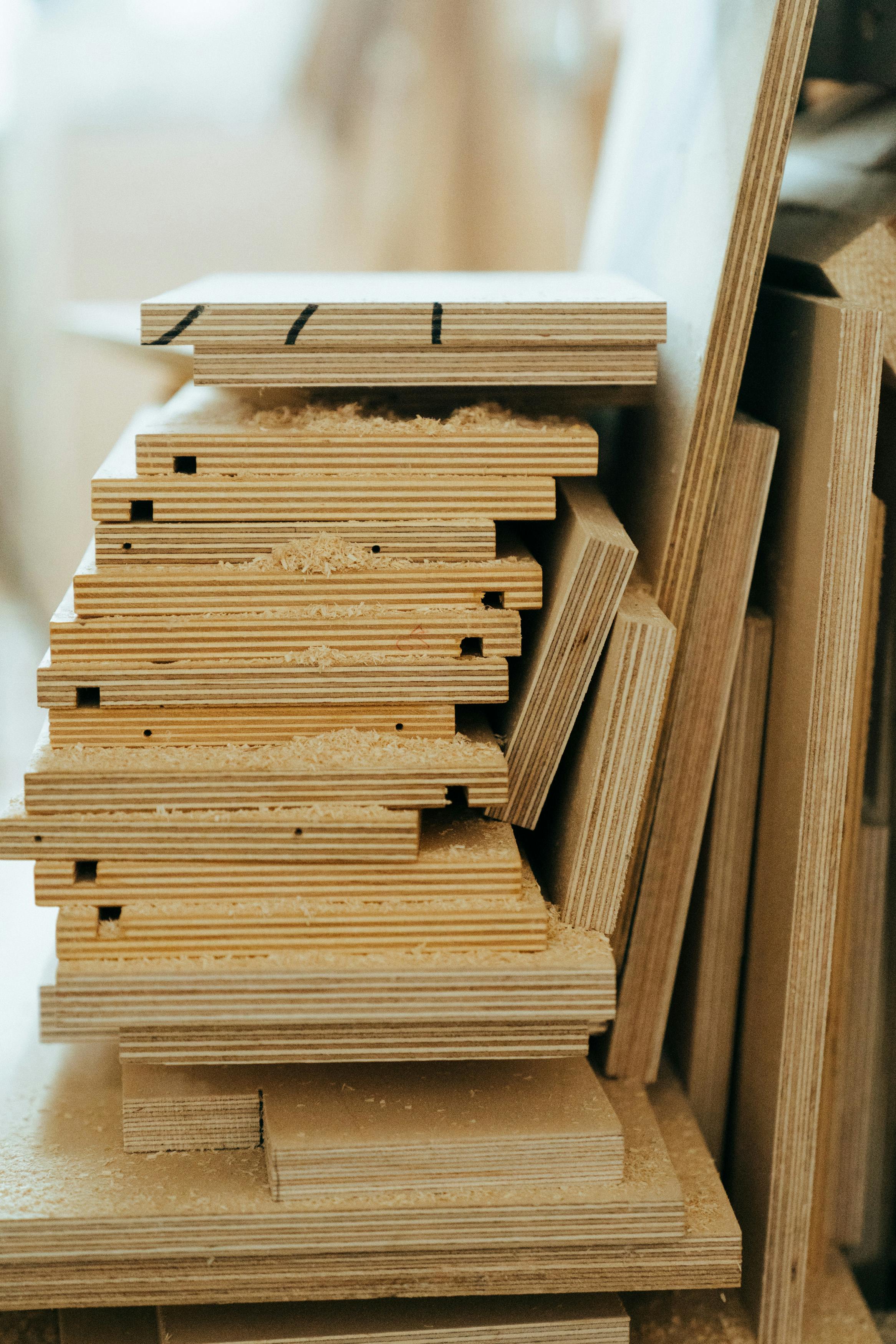
"BWR" and "BWP" show up in almost every plywood-related quote in India, usually with no explanation of what the letters actually mean or why one costs more than the other. This is a short, plain guide to both — what the grades are based on, and where each genuinely applies.
TL;DR
BWR (Boiling Water Resistant) and BWP (Boiling Waterproof) are both plywood grades defined by the adhesive bonding standard the board is tested against — BWP is tested to a more demanding standard and generally offers better long-term water resistance, making it the common choice for the highest-moisture areas (under-sink kitchen cabinets, bathroom-adjacent pieces). BWR performs well in moderate-moisture situations at a generally lower cost. Neither is "waterproof" in the sense of being submersible — both describe adhesive bonding resistance, not the board being impervious to water. For most of a typical Bangalore home, BWR is often sufficient outside specific high-moisture zones, where stepping up to BWP makes more sense.
What "BWR" and "BWP" Actually Stand For
- BWR (Boiling Water Resistant): Refers to the adhesive used to bond the plywood's layers, tested by boiling a sample and checking the bond holds without delaminating. BWR-grade plywood handles moderate, intermittent moisture exposure well.
- BWP (Boiling Waterproof): Tested to a more demanding version of a similar principle — generally involving extended or repeated boiling-water exposure — and is the higher of the two grades commonly used in Indian residential cabinetry, offering better resistance to sustained or higher moisture exposure than BWR.
Important Distinction: Neither BWR nor BWP means the plywood is meant to be submerged or is completely impervious to water damage under all conditions. The grading describes adhesive bond resistance under a specific test, not a guarantee against all forms of water damage — proper sealing, edge-banding and finish application still matter regardless of grade.
Where Each Grade Genuinely Applies
BWR Plywood (Moderate Moisture)
BWR is a sensible, cost-effective choice for general cabinetry in moderate-moisture situations:
- Most wardrobe carcasses
- Living room and bedroom furniture
- Kitchen cabinetry away from the direct sink/wet zone
BWP Plywood (High Moisture)
BWP is the more defensible choice for genuinely high-moisture applications:
- Cabinetry directly under kitchen sinks
- Cabinetry immediately adjacent to a wet area or bathroom
- Ground-floor units or homes with significant moisture exposure from gardens or nearby water (per our wardrobe material guide)
For a typical mid-to-upper-floor Bangalore apartment without unusual moisture exposure, using BWP throughout the entire home is often more than what's genuinely necessary — this is one of the more common places we see costs pushed up without a proportional real-world benefit, similar to the broader point made in our HDHMR vs Plywood vs MDF comparison about grade selection mattering more than blanket upgrades.
Cost Difference Between BWR and BWP
BWP generally costs more than BWR at a comparable thickness and brand, reflecting the more demanding bonding standard it's tested against.
The cost difference is worth paying specifically where the higher moisture resistance is genuinely relevant. Applying it uniformly across an entire home regardless of actual moisture exposure adds cost without a proportional benefit in low-moisture areas.
How to Verify What Grade You're Actually Getting
- Get it in writing: Plywood grade should be stated explicitly on the quotation, ideally alongside the brand, since grade claims aren't always reliable without a recognizable, verifiable brand behind them.
- Inspect the boards: Asking to see the board's own marking or certification (most quality plywood is stamped or labelled with its grade) is a reasonable, simple verification step before work begins.
What WOODWORKS Uses (Verified, Company-Specific)
Confirmed directly from our own process: WOODWORKS uses premium plywood — specific grade selection is discussed per application during consultation, matched to the piece's actual location and moisture exposure rather than one fixed grade applied everywhere.
FAQ
Is BWP always better than BWR? Not universally "better" — BWP offers stronger moisture resistance, which matters most in genuinely high-moisture applications. In moderate-moisture, general-use situations, BWR performs well at a lower cost, making it the more sensible choice for those specific pieces.
Does BWP mean the plywood is fully waterproof? No — the grading describes adhesive bond resistance under a specific boiling-water test, not that the board is impervious to all water exposure or safe to submerge. Proper sealing and finishing still matter regardless of grade.
Do I need BWP plywood throughout my whole home in Bangalore? Generally no — Bangalore's climate is moderate overall, and BWP is most clearly justified in specific high-moisture applications (under-sink kitchen cabinets, ground-floor units, homes near gardens or water) rather than uniformly across an entire home.
How can I verify the plywood grade I'm being quoted? Ask for the grade and brand to be specified in writing on the quotation, and ask to see the board's own stamped grade marking or certification before work begins.
What does WOODWORKS use? Premium plywood, confirmed directly from our own process — specific grade selection is discussed per application during consultation, matched to the piece's actual location and moisture exposure rather than one fixed grade applied everywhere.
Conclusion
BWR and BWP aren't a simple "better vs worse" pair — they're two grades suited to different moisture situations, and understanding the difference helps you evaluate whether a quote's material choices actually match your home's real needs, rather than defaulting to the most expensive option everywhere.
CTA: Want a grade recommendation matched to your specific rooms? Book a free consultation, or start with our estimate tool.
About the Author
Vinit is the founder of WOODWORKS Interior. With over 10 years of experience working with fashion brands, he now leads a design-and-build studio creating custom home interiors across Bangalore.
Planning a project of your own?
Tell us about your space and we'll reply within 24 hours with ideas and an estimate.
Book a Free Consultation