
Journal / Article
Grandmillennial Style: Why Your Grandmother's Design Instincts Are Back in 2026
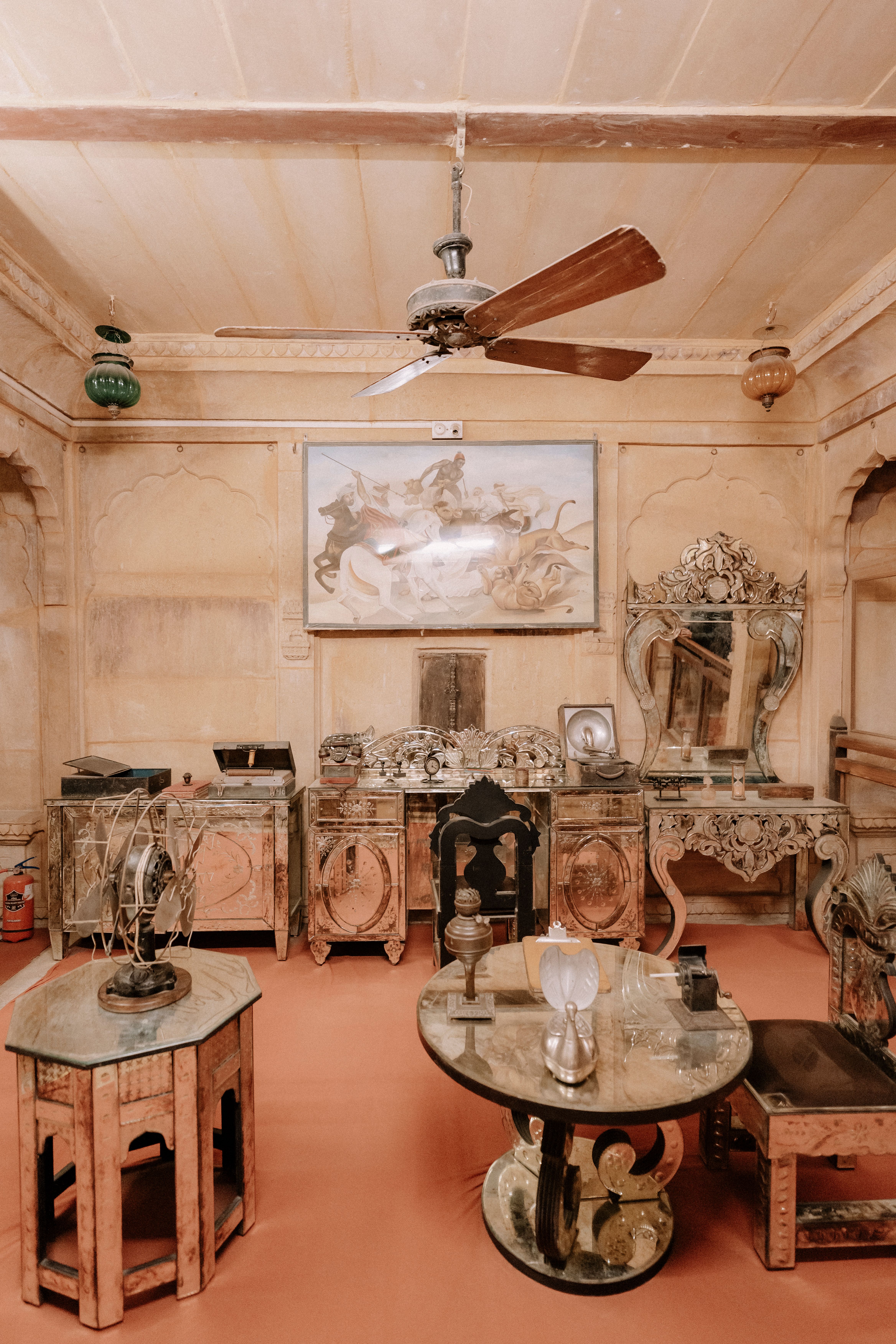
"Grandmillennial" is a term that's been circulating in Western design press for a few years now — it describes millennials rejecting sterile, all-white minimalism in favor of the detailed, traditional, slightly maximalist furniture their grandparents actually had. Chintz upholstery, needlepoint, dark wood furniture with real craftsmanship behind it.
The label doesn't translate directly to Indian homes, and it's worth saying that plainly rather than forcing an imported trend to fit. But the underlying instinct absolutely does translate, and we're seeing real evidence of it in our own consultations — a growing number of clients specifically asking for carved wood detailing, cane furniture, and brass fixtures that look and feel like something their grandparents' generation would have chosen, not the templated modular look that's dominated the last decade of Indian interiors.
What "Grandmillennial" Actually Means in an Indian Context
Strip away the Western-specific references (chintz, needlepoint, the particular brown furniture of a certain American design era) and what's left is a genuinely useful idea: a rejection of sterile, mass-produced minimalism in favor of pieces with visible craftsmanship, material honesty, and a sense of having been chosen rather than selected from a catalog.
For Indian homes, the real equivalent isn't hard to identify, because it's sitting in most of our own grandparents' houses already. Carved wood detailing on cabinet fronts and furniture edges. Cane and rattan seating and inserts. Brass hardware and fixtures, warm and slightly imperfect rather than uniformly polished. Furniture proportions that feel substantial rather than the lighter, more minimal scale that's dominated modular design for years.
Why This Instinct Is Genuinely Resurging Right Now
The honest driver here is fatigue, similar to what we've written about with other recent trend shifts — a decade of largely templated modular interiors across Indian cities has produced a lot of homes that look competent but interchangeable. Carved detailing, cane work and brass fixtures read as personal and considered precisely because they require real craftsmanship and can't be mass-produced identically across a thousand apartments the way flat laminate modular furniture can.
There's also a generational nostalgia component worth naming honestly — a lot of our clients in their 30s and early 40s grew up around this kind of furniture in a grandparent's home, and there's a genuine emotional pull toward recreating that warmth now that they're furnishing their own homes, even if they wouldn't have chosen it themselves ten years ago.
Where It Shows Up Best
- Living rooms are the most natural home for this style's signature moves — a carved wood coffee table or console, cane-backed seating, brass table lamps or fixtures as considered accent pieces rather than a full-room commitment.
- Dining spaces take to carved wood particularly well — a substantial, detailed dining table reads as an heirloom piece even when newly made, and this is one of the areas where clients most often ask us to lean fully into the style rather than using it as an accent.
- Study or reading corners suit cane furniture especially — a cane-backed chair paired with a carved wood side table creates exactly the "considered, personal" feeling this style is built around, in a space that's often otherwise under-designed.
- Wardrobe and cabinet detailing is where we most often introduce this style at a smaller scale for clients not ready for a full-room commitment — carved edge detailing or brass handles on an otherwise contemporary wardrobe brings in the warmth without overhauling the whole room.
The Materials and Craft Behind the Look
This is a genuinely craft-intensive style, more so than most of the trends we've covered in this series, and it's worth being upfront about that. Carved detailing requires real hand or CNC-assisted carving work on solid wood, not a printed or laminated approximation — this is a meaningfully different fabrication process from flat modular cabinetry and takes more time. Cane work, similarly, is a specialized craft distinct from standard upholstery or joinery. Brass fixtures and hardware, especially in a warm, slightly aged or hand-finished tone rather than a uniform polished chrome look, complete the material palette.
Grandmillennial vs Standard Traditional: What's Different
- Standard "Traditional" Indian Furniture: Often heavy, ornate throughout; full-room commitment; dense, maximalist carving; uniform/polished brass; can read as dated if overdone.
- Grandmillennial-Inspired: Selective — one or two considered pieces; mixed with contemporary pieces; restrained, considered carving; brass with a warmer and less uniform finish; reads as personal and intentional.
Mistakes to Avoid
The most common mistake is treating this as license to fully recreate a grandparent's home rather than selectively bringing in a few considered pieces — a full room of dense, ornate traditional furniture can read as dated rather than intentional, whereas one or two carved or cane pieces within an otherwise contemporary room reads as exactly the "personal, considered" feeling the style is going for.
The second is choosing mass-produced "traditional-style" furniture (printed wood-grain laminate imitating carving, for instance) instead of genuine craftsmanship — this style specifically depends on real material honesty and visible craft quality; a fake version undermines the entire premise and tends to look worse than simply not attempting the style at all.
What It Costs
Because carved detailing and cane work require specialized craftsmanship and more fabrication time than standard modular cabinetry, this style typically carries a real premium over flat-laminate modern furniture for an equivalent piece — this is genuine craft cost, not a markup, and it's worth going in with realistic expectations about it.
The good news is that, like several other styles in this series, it doesn't require a full-room commitment to read well — a single carved console or cane-backed dining chair set can deliver the effect at a much more contained cost than furnishing an entire room this way. For an accurate sense of what a specific piece would cost, our estimate tool prices against your actual requirements.
FAQs
Is this the same as "vintage" or "antique" furniture? Not necessarily — Grandmillennial-inspired pieces are typically newly made with traditional craft techniques (carving, cane work) rather than sourced as genuine antiques, though the two can certainly be combined in the same room.
Will this look dated the way some traditional Indian interiors from a decade ago do? It's less likely to, provided it's applied selectively rather than as a full-room commitment — the "dated" feeling in older traditional interiors usually comes from dense, uniform application throughout a space rather than from the craftsmanship itself, which holds up well when used as considered accent pieces.
Can this be mixed with a more modern or minimal overall style? Yes, and this is actually the more common and more successful application we're seeing — a carved wood console or cane-backed chair within an otherwise contemporary room tends to work better than committing an entire space to the style.
Why does this cost more than standard modular furniture? Carved detailing and cane work require specialized craftsmanship and meaningfully more fabrication time than flat-laminate modular pieces — the cost reflects genuine craft labor, not just material.
Is cane furniture durable for daily use, or is it more decorative? Well-made cane furniture, properly maintained, holds up to genuine daily use — it's a traditional material with a long history of functional, not just decorative, application in Indian homes.
Conclusion
Grandmillennial style, translated honestly into an Indian context, isn't really a new trend at all — it's a return to craftsmanship and material honesty that a lot of Indian homes had as standard a generation ago, before modular, mass-produced furniture became the default. Used selectively rather than as a full-room commitment, it's one of the more distinctive and personal directions available right now, precisely because it can't be templated the way most current interior design can.
CTA: Considering a carved wood piece, cane furniture, or brass detailing for your home? Book a free consultation and we'll talk through what's realistic for your space and budget, or explore cost through our estimate tool.
Planning a project of your own?
Tell us about your space and we'll reply within 24 hours with ideas and an estimate.
Book a Free Consultation