
Journal / Article
Home Decor Budget Breakdown: What ₹50,000 / ₹1.5 Lakh / ₹3 Lakh Actually Gets You in Bangalore (2026)
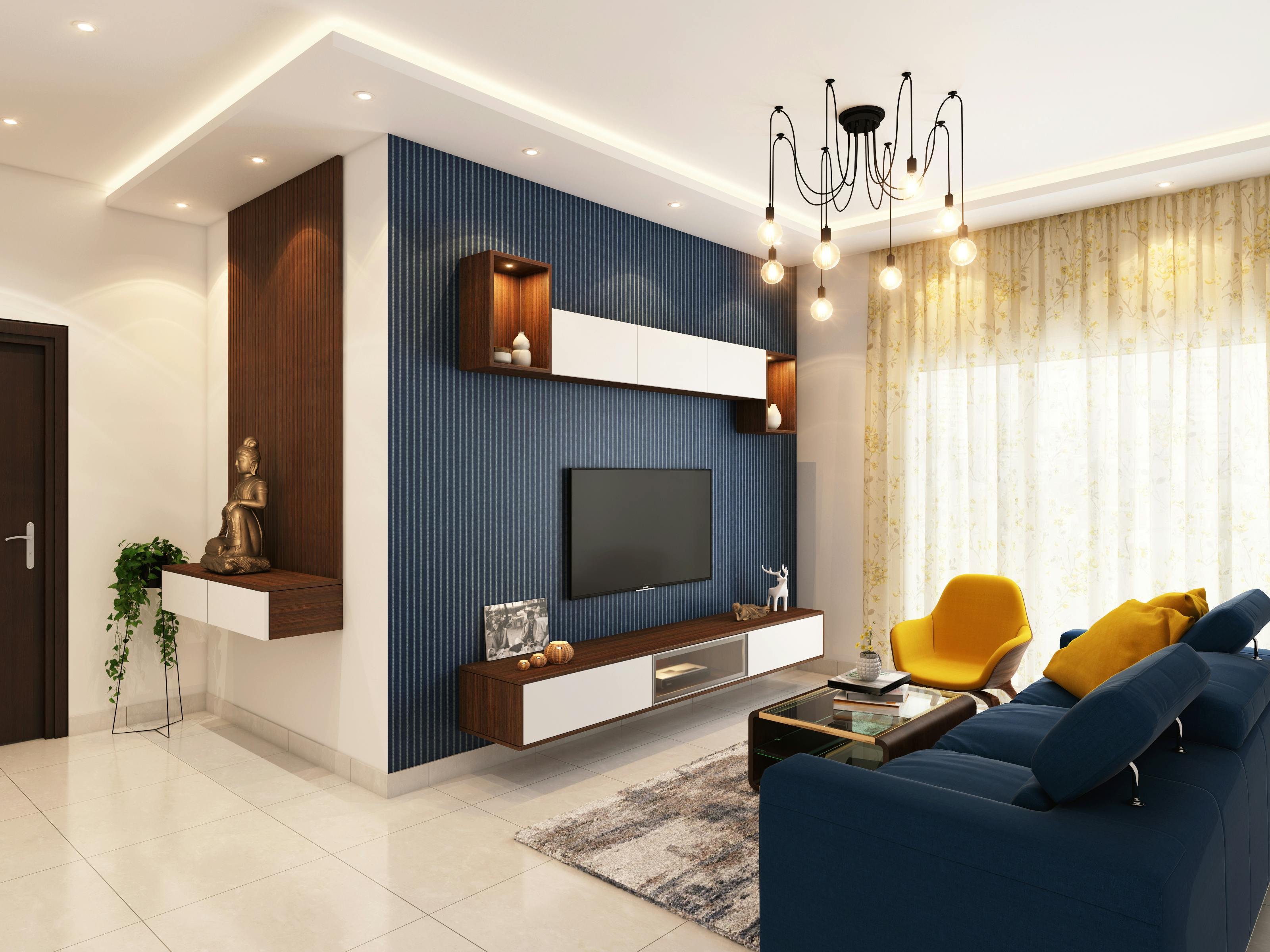
The single most common question we get in early consultations isn't about style — it's some version of "what can I actually get for my budget?" And the honest answer we usually give — "it depends on the room, the materials, the scope" — while true, isn't actually useful to someone trying to plan. So we're doing something we don't usually do: laying out three real, common budget tiers and being specific about what each one realistically covers, rather than staying vague.
A caveat worth stating upfront, because it's true and because vague budget content tends to oversell what's realistic: these are planning bands, not fixed quotes. Room size, material choice, and site conditions all move the actual number. Treat this as a realistic starting point for a conversation, not a guarantee — and any of these tiers can be checked against your specific space through our estimate tool.
₹50,000 Tier: Focused, Single-Element Upgrades
At this tier, a full-room transformation isn't realistic, and it's worth saying that honestly rather than overpromising. What this budget does support well is a single, well-executed focal element — the kind of upgrade that changes how a room feels without touching everything in it.
Realistic scope at this level: a considered accent piece with genuine craftsmanship (a carved console, a smaller cane furniture piece), an upgrade to a single wardrobe's finish or hardware (moving from standard laminate to a more premium finish, or adding handleless detailing to an existing unit), a feature wall treatment on one wall (fluted or slatted panelling, sized to the wall rather than the whole room), or refreshing lighting in a single room with a proper layered approach (ambient, task, accent) rather than a single overhead fixture.
What's not realistic at this tier: full-room cabinetry (a wardrobe or kitchen from scratch), multi-room work, or a full "look" across an entire space. This tier works best as a single, well-chosen intervention — the "one considered piece" approach we've recommended across several of the style trends in this series actually maps quite naturally onto this budget level.
₹1.5 Lakh Tier: One Room, Properly Done
This is where a genuine single-room transformation becomes realistic — not a full luxury build-out, but enough to meaningfully redo one space with real material quality rather than compromising everywhere to stretch the budget across multiple rooms.
Realistic scope at this level: a complete wardrobe for a standard bedroom (built-in, reasonable size, mid-tier material with some premium detailing such as handleless shutters or a feature finish on select panels), or a considered living room refresh combining a media unit, some panelling, and lighting redesign, or a smaller modular kitchen upgrade (cabinetry refresh rather than a full gut renovation, depending on existing plumbing and electrical work needed).
This tier is also where several of the styles we've covered in this series become genuinely achievable as a real room, not just an accent — an Organic Modern living room with curved-edge cabinetry, or a Dark Japandi bedroom with a proper headboard wall and layered lighting, both sit comfortably in this range depending on room size and exact material choices.
₹3 Lakh Tier: Full Room, Premium Execution, or Two Rooms Done Well
At this level, real choices open up — either a single room done with genuine premium execution (solid wood or heavy veneer rather than laminate-forward construction, full handleless detailing, integrated lighting design, artisan or brass hardware), or two connected rooms brought to a good, consistent standard together.
Realistic scope at this level: a full premium wardrobe with genuine solid wood or heavy veneer construction, a complete modular kitchen with quality cabinetry and considered material choices (though full structural/plumbing changes add to this), or a living-dining combination redone together with consistent material and lighting planning across both spaces — which matters more than people expect, since two well-done but inconsistent rooms read as disconnected rather than intentional.
This tier is where genuinely craft-intensive styles like Artisan Maximalism or Grandmillennial-inspired detailing become realistic as more than a single accent piece — multiple handcrafted or carved elements, properly integrated rather than sprinkled in as isolated touches.
What Actually Moves the Number Within Each Tier
A few honest factors that shift where you land within any of these bands, worth knowing before you start planning:
- Room size is the most obvious lever — a compact bedroom wardrobe costs meaningfully less than the same finish and detailing applied to a large master bedroom's walk-in.
- Material choice moves cost more than most people expect — the jump from standard laminate to genuine veneer, or from standard hardware to handleless or artisan detailing, is a real cost driver even when the underlying construction and dimensions stay identical, as we discussed in the Quiet Luxury post.
- Existing site conditions matter for anything beyond cabinetry and panelling — if a kitchen needs plumbing or electrical rework, that's additional scope beyond the cabinetry cost itself, and it's worth asking about this explicitly rather than assuming a quote covers it.
- Fabrication complexity — curved cabinetry, carved detailing, or cane work all take more fabrication time than straight-edged standard construction, which is why styles like Organic Modern or Grandmillennial carry a real premium over flat, standard modular work, as we've covered in those individual posts.
Where to Prioritize Spend at Any Budget Level
Regardless of tier, a few honest principles hold across all three: prioritize the pieces you'll interact with daily (a kitchen you cook in every day, a wardrobe you open every morning) over purely decorative elements, since that's where quality is felt most; keep material and finish consistent across whatever you do commit to rather than spreading a budget thin trying to touch every room lightly; and get a real, itemised estimate for your specific space before committing to a tier mentally, since room dimensions and existing conditions move the number more than most generic guides account for.
Mistakes to Avoid
The most common mistake at any budget level is spreading it too thin across multiple rooms instead of committing to one space done properly — a little bit of upgrade in every room tends to read as unfinished everywhere, while the same total budget concentrated on one room tends to read as genuinely considered.
The second is not accounting for material and finish premiums when planning — a ₹1.5 lakh budget planned around laminate-tier assumptions will feel disappointing if the actual preference, once samples are seen in person, leans toward veneer or solid wood; it's worth seeing real material samples early in the planning process, before the budget tier is mentally locked in.
FAQs
Are these numbers accurate for any city, or specific to Bangalore? These are planning bands based on Bangalore-area costs specifically — material and labour costs vary meaningfully by city, so the same tiers would land differently elsewhere in India.
Do these numbers include design consultation, or just materials and fabrication? This varies by project scope and should be confirmed directly — the ranges above are meant as general planning bands for the visible scope of work (cabinetry, panelling, finishing), not a fixed quote breakdown.
What if my budget falls between two tiers? Most real budgets do fall between round numbers like these — the tiers are meant as reference points to understand what's realistic at different scales, not rigid categories. An estimate against your actual space and budget will give a far more precise picture than trying to fit your number into one of these three bands exactly.
Should I decide my style first, or my budget first? Budget first is generally more useful — knowing your realistic tier helps narrow which styles and scope are actually achievable, rather than falling in love with a look that needs a significantly larger budget to execute properly.
Does a higher budget always mean better quality, or just more scope? Both, to different degrees — within a single room, a higher budget generally means better material and more detailed fabrication (handleless work, artisan detailing); across multiple rooms, a higher budget often just means more scope covered at a consistent quality level rather than proportionally "better" quality per room.
Conclusion
Vague budget advice isn't actually useful when you're trying to plan a real project — these three tiers are meant to give you a realistic sense of what's achievable at each level in a Bangalore home, in 2026, without the usual non-answer of "it depends." That said, your specific room, material preferences and site conditions will move the real number, so treat this as a starting point for a conversation, not a final quote.
CTA: Want to know exactly where your specific project falls? Get a free itemised estimate based on your actual room and requirements, or book a free consultation to talk through what's realistic for your budget.
Planning a project of your own?
Tell us about your space and we'll reply within 24 hours with ideas and an estimate.
Book a Free Consultation