
Journal / Article
Warm Minimalism: The 2026 Style Replacing Stark White Interiors in Bengaluru Homes
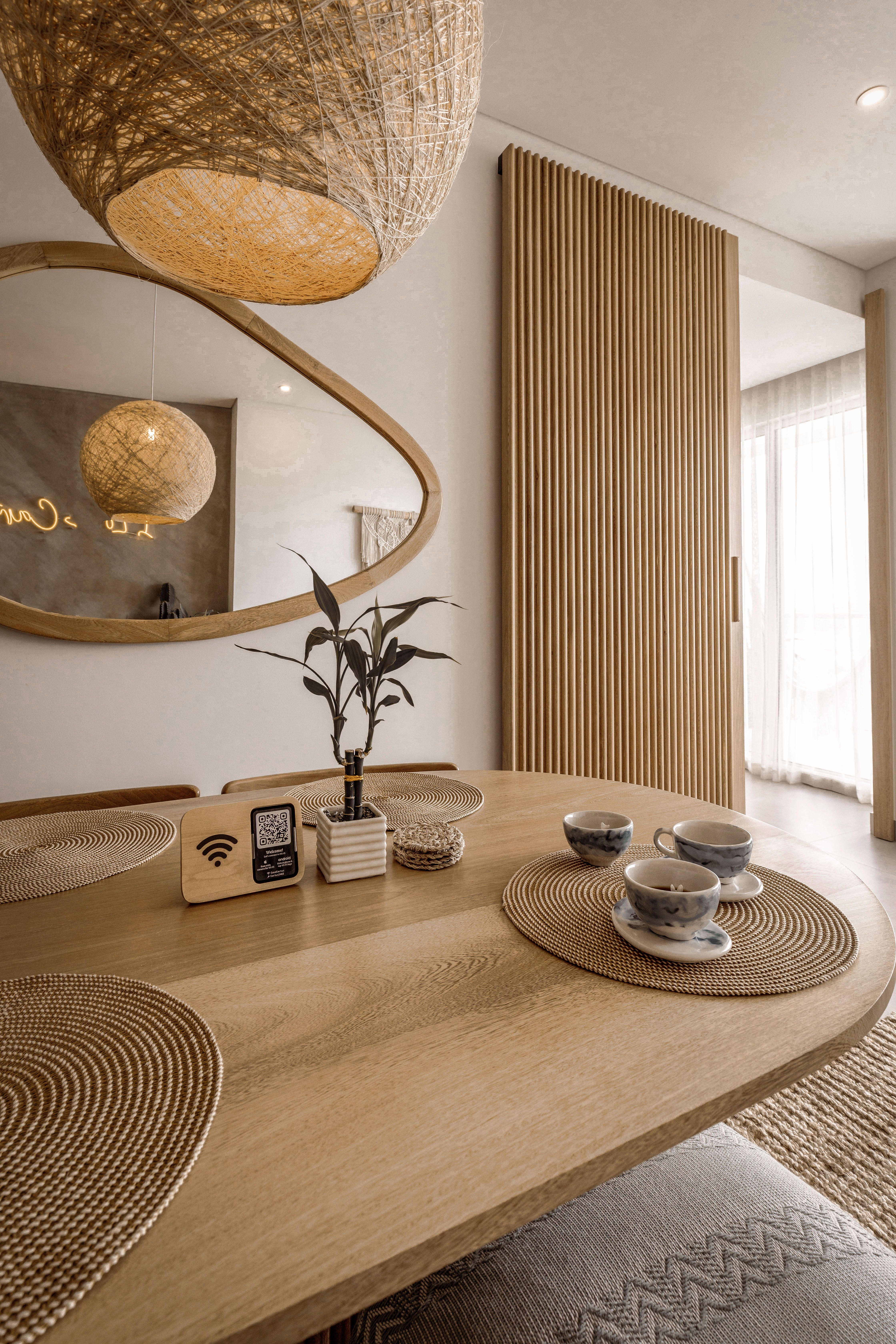
Minimalism has meant one thing in a lot of homes for years now: white walls, white cabinets, clean lines, not much else. It's a real discipline, and it photographs well — but it's also started to feel, for a lot of homeowners, more clinical than calm. What's replacing it in 2026 isn't a return to clutter or ornamentation. It's warm minimalism — the same restraint and clean lines, but built from natural, textured materials instead of stark white surfaces.
TL;DR
Warm minimalism keeps minimalism's core discipline — clean lines, no clutter — but swaps stark white and high-gloss surfaces for natural wood, texture and warmer tones. It's a genuinely current, actively discussed 2026 design direction, not a rebrand of an older trend. It suits Bengaluru homes well since it's built from materials (natural veneers, solid wood) that don't require anything unusual to source here. The key discipline to preserve: restraint stays non-negotiable — warm minimalism is not an invitation to add texture and warmth everywhere at once.
What Warm Minimalism Actually Is
The core idea is straightforward: keep minimalism's defining discipline — clean lines, uncluttered layouts, no visual excess — but change the material palette from stark white and high-gloss surfaces to natural wood, textured finishes, and warmer, more grounded tones. It's not a different philosophy from minimalism; it's the same philosophy, expressed through warmer material choices.
This distinguishes it clearly from styles we've covered elsewhere that lean into more dramatic warmth or texture — Dark Japandi, for instance, pushes deliberately moody and deep-toned. Warm minimalism stays lighter and more restrained; the warmth comes from material honesty (visible wood grain, natural texture) rather than a dramatic color shift.
Why It's Replacing Stark White Minimalism Right Now
The honest driver is fatigue with the clinical read that pure white minimalism can produce over time — a genuinely uncluttered white room can feel calm in a photograph and cold to actually live in day to day. Warm minimalism solves this without abandoning the underlying discipline that made minimalism appealing in the first place: it's still restrained, still uncluttered, just built from materials that read as considered and lived-in rather than sterile.
Why It Suits Bengaluru Homes
Warm minimalism is built substantially from natural wood, veneer and textured material — exactly the material family WOODWORKS already works with as standard (premium plywood, natural veneers, solid wood, laminates, acrylic finishes). This isn't a style that requires unusual or hard-to-source materials for a Bengaluru project; it's an achievable direction within a fairly standard material palette, which is part of why it's proving practical rather than just aspirational.
Where It Shows Up Best
- Living Rooms: Carry warm minimalism most naturally — a media unit or wall treatment in visible-grain wood, paired with a genuinely restrained furniture layout (a small number of considered pieces, not many).
- Kitchens: Take to it through cabinet finish choice — a warm wood-tone or matte natural finish rather than high-gloss white or stark laminate, paired with simple, clean-lined hardware.
- Bedrooms: Benefit from a warm wardrobe finish and a restrained overall palette — this is one of the easier rooms to commit fully to the style, since bedrooms already tend toward simpler layouts than living spaces.
- Wardrobe Interiors & Storage: Can carry warm minimalism's material logic even where the exterior stays simple — a warm-toned interior finish is a lower-commitment way to introduce the style, similar to how we've discussed contained, single-piece trend adoption in earlier posts.
Warm Minimalism vs Standard Minimalism: What Changes
| Feature | Standard (Stark) Minimalism | Warm Minimalism |
|---|---|---|
| Palette | White, often high-gloss | Natural wood tones, warm neutrals, matte |
| Material Emphasis | Uniform, often laminate-forward | Visible grain, natural texture, tactile finishes |
| Feel | Clean, sometimes cold | Clean, but lived-in and grounded |
| Discipline | Restraint (unchanged) | Restraint (unchanged) |
| Hardware | Chrome, ultra-minimal | Warm-toned or integrated, minimal |
Mistakes to Avoid
- Over-accessorizing: The most common mistake is treating "warm" as license to add texture and pattern everywhere — warm minimalism is still minimalism; the discipline of restraint doesn't loosen just because the palette warms up. One or two genuinely considered natural-material pieces per room, not five competing textures, is what keeps the look feeling intentional rather than busy.
- Mixing cold and warm materials: The second mistake is mixing in too much residual cold-toned material from a prior stark-white plan — a high-gloss white countertop or chrome fixture sitting inside an otherwise warm, natural-material room breaks the cohesion the style depends on.
What It Costs
Because warm minimalism relies on genuine natural wood and veneer rather than high-gloss laminate, it typically sits at a similar or modestly higher cost than a comparable stark-white build using similar-grade materials — the difference is more about finish and material choice than a fundamentally different construction approach. For a specific sense of cost for your rooms, see our 3BHK & Villa cost guide or use our estimate tool.
FAQ
Is warm minimalism just a rebrand of Japandi or organic modern? It overlaps in spirit — all three value natural materials over stark surfaces — but warm minimalism stays closer to minimalism's original restraint and lighter palette than Japandi's blend of Japanese and Scandinavian influences or organic modern's emphasis on curved forms. They're related directions, not identical ones.
Does warm minimalism cost more than stark white minimalism? Not dramatically — the difference is mainly in finish and material choice (natural veneer versus high-gloss laminate) rather than a fundamentally different build, so cost differences are generally modest for comparable material grades.
Can I introduce warm minimalism into just one room? Yes, and this is often the more practical starting point — a warm-toned wardrobe interior or a single living room media unit can introduce the style without committing an entire home to a palette shift.
Will warm minimalism date quickly like some trends do? Its underlying discipline (restraint, no clutter) is the same discipline that's kept minimalism relevant for years, which suggests durability beyond a single trend cycle — though as with any current style, some specific material or color choices within it may feel more time-bound than the core philosophy.
What materials does WOODWORKS use to achieve this look? Our confirmed material line — premium plywood, natural veneers, solid wood, laminates and acrylic finishes — supports warm minimalism directly without requiring anything unusual; the style is largely a finish and palette choice within materials we already work with.
Conclusion
Warm minimalism is a genuine, current shift away from the clinical read that stark white minimalism can produce, without abandoning the discipline that made minimalism appealing in the first place. It's an achievable direction for Bengaluru homes specifically, built from a material palette that doesn't require anything unusual to source.
CTA: Curious what warm minimalism would look like in your home? Book a free consultation, or explore cost through our estimate tool.
About the Author
Vinit is the founder of WOODWORKS Interior. With over 10 years of experience working with fashion brands, he now leads a design-and-build studio creating custom home interiors across Bangalore.
Planning a project of your own?
Tell us about your space and we'll reply within 24 hours with ideas and an estimate.
Book a Free Consultation